
- About
- Our Design Process
- MoreHide
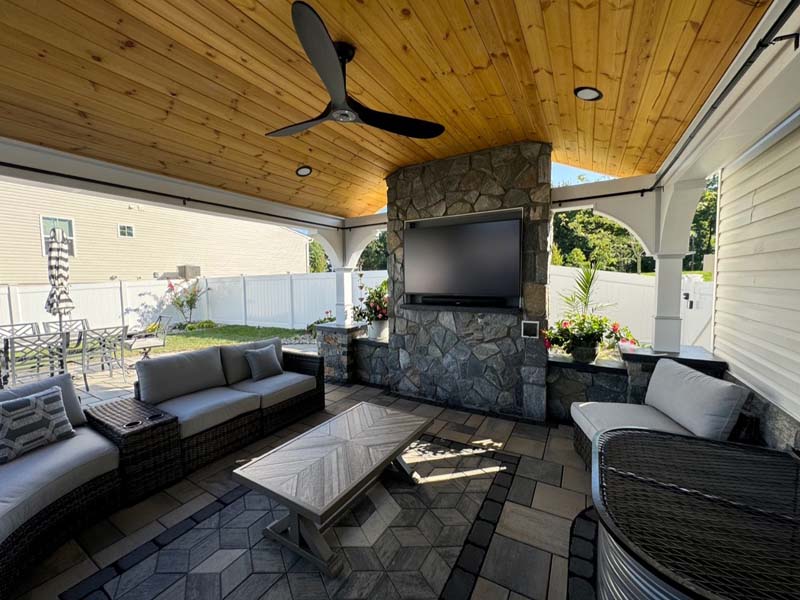

A fire pit is one of the most requested features in our outdoor living projects across Bucks County and Montgomery County. Before design can start, though, there is one choice that shapes everything else.
Gas or wood?
The gas vs wood burning fire pit decision affects cost, upkeep, safety, how often you will use it and even how you arrange the seating. Neither option is universally better. The right answer depends on how you live outdoors. Here is how they compare, based on years of fire pit design and installation in the region.
There is something timeless about a real wood fire. The crackle, the glow and the smell are hard to replicate.
Advantages:
Drawbacks:
Wood burning fire pits suit larger yards where smoke can drift away from the house and neighbors. Many homeowners on bigger lots in Buckingham and New Hope love the traditional feel.
A gas fire pit trades a bit of rustic charm for convenience. Turn a key or press a button and the fire is on.
Advantages:
Drawbacks:
If you already have natural gas running to an outdoor kitchen, adding a gas fire pit can be simpler. Propane is an option where natural gas is not available.
| Factor | Wood Burning | Gas |
|---|---|---|
| Ambiance | Crackle, smell, real flames | Clean, steady flames |
| Heat output | Higher | Moderate |
| Smoke | Yes | No |
| Startup | Several minutes | Instant |
| Cleanup | Ash removal | Minimal |
| Installation cost | Usually lower | Usually higher |
| Cooking | Yes | Not recommended |
| Placement flexibility | Needs more clearance | More flexible |
In most gas vs wood burning fire pit comparisons, wood comes out cheaper up front. Gas requires a licensed line, burner hardware and often permits. Over time, you will buy firewood for a wood fire pit and pay for gas on the other. For a full budget breakdown, read our guide on fire pit cost.
Where the fire pit sits matters as much as the fuel.
Wood fires need generous clearance from the house, trees and overhead structures. Gas fire features offer more flexibility, but they still require proper ventilation and manufacturer clearances. If you want fire under a pergola or pavilion, gas is often the safer path, and design details matter.
Every fire pit needs a stable, noncombustible surface. A well built paver patio is the most common base we install.
Townships in Bucks County and Montgomery County set their own rules for open burning and gas installations. Some limit wood burning or require specific setbacks. Gas lines typically require permits and inspections. We review your township’s rules during planning.
Ask yourself:
Many families in Yardley and Blue Bell settle the gas vs wood burning fire pit debate during our design process, once they see both options planned for their yard.
Long-term care is an often overlooked part of the gas vs wood burning fire pit decision.
A wood fire pit needs regular ash removal. You will also want a dry, covered spot for firewood away from the house to discourage pests. Over time, the fire liner may need replacement from heavy use.
A gas fire pit needs far less daily care. Plan to clear leaves and debris from the burner, check connections each season and cover the unit when it is not in use. Glass or lava media may need an occasional rinse.
Both types benefit from a quick inspection each spring before the season begins. Our team can check stonework, joints and surrounding pavers so your fire area stays safe and good looking in Doylestown, Newtown, Horsham and King of Prussia alike.
Yes, a gas fire pit produces real warmth, though usually less than a large wood fire. Burner size and design affect how much heat you feel.
Many can, with a conversion kit and a gas line. The fire pit needs proper sizing and ventilation for the burner. A professional should evaluate it first.
Natural gas is convenient because it never runs out, but it requires a line from your home. Propane works anywhere but needs tank refills and a spot to hide the tank.
Smokeless designs reduce smoke through better airflow, but they rarely eliminate it entirely. If smoke is your main concern, gas is the most reliable choice.
Gas fire pits are generally easier to control because they shut off instantly and do not throw sparks. Any fire feature still needs adult supervision.
The gas vs wood burning fire pit decision is easier with expert guidance. DiCenso Landscaping designs and builds fire features for homeowners in Bucks County and Montgomery County, from Doylestown and Yardley to Horsham and Blue Bell.
Call 267-261-6223 or schedule a consultation to get started.