
- About
- Our Design Process
- MoreHide
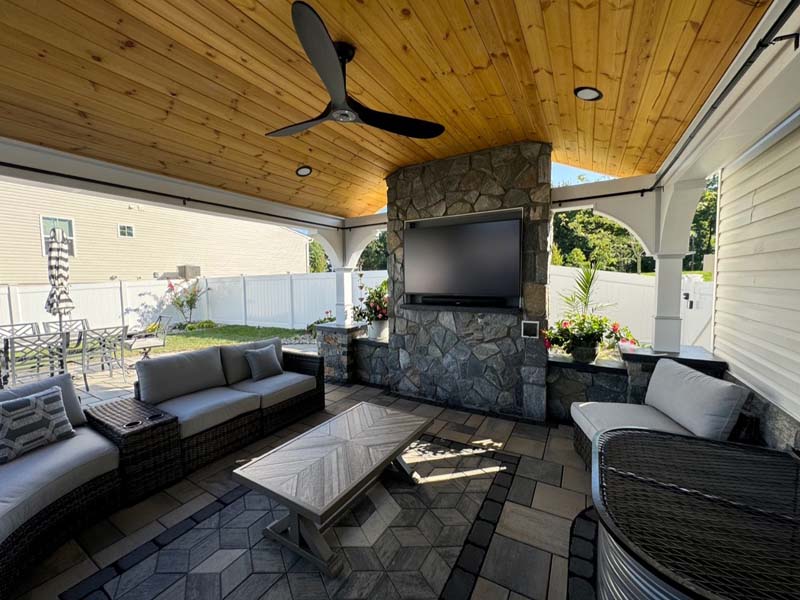
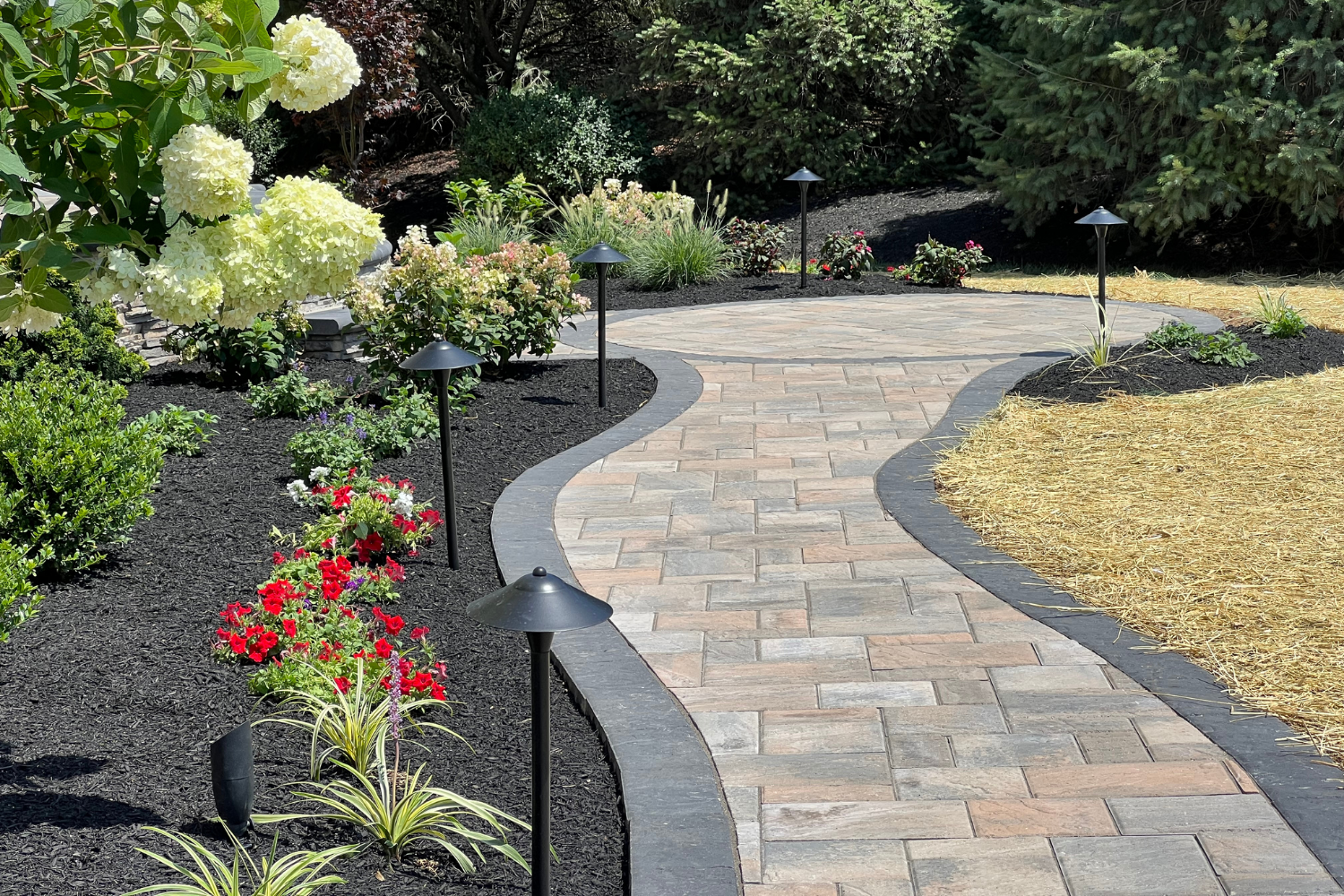
Drive around Warminster and you can spot the failed patios from the street. Sunken corners. Pavers rocking under a chair leg. A soldier course that has drifted out and left a gap the width of a finger. Weeds growing in joints that should have been locked shut.
None of those are paver problems. They are base problems. The pavers are almost always fine, which is the frustrating part, because the homeowner picked out the pavers and the contractor skipped the part underneath.
We install paver patio services across Warminster, Horsham, and Doylestown, and roughly a third of what we get called about is fixing somebody else’s.
Two forces, and this area serves up both.
Freeze-thaw is the first. Southeastern Pennsylvania cycles above and below freezing repeatedly through the winter, not just once. Every cycle, water in the soil expands as it freezes and contracts as it thaws. If that water is sitting in or under your patio base, the base moves. Pavers ride the base. When the base moves, the patio moves.
The soil is the second. A lot of Warminster and Horsham sits on clay-heavy ground that drains slowly. Slow drainage means the water is still there when the temperature drops. That combination, poor drainage plus repeated freeze cycles, is what tears patios apart in this specific region.
You cannot change the weather or the soil. You can build for both.
The finished patio is maybe fifteen percent of the work. Here is the rest.
Excavation. Down to undisturbed subgrade, deep enough for the full base plus bedding plus paver thickness. Cutting this short is how contractors save a day and cost you a patio. Depth depends on soil and load, and a patio that a car will ever touch needs considerably more than one that will only hold a grill and four chairs.
Geotextile fabric. A separation layer between subgrade and aggregate so the clay does not migrate up into the base and turn it to mush. On clay-heavy Warminster lots this is not optional in our book, and it is one of the first things a cheap bid deletes.
Compacted aggregate base. Crushed stone, placed in lifts, compacted each lift, not dumped and rolled once. This is the structural layer. Every millimeter of settlement here shows up as a dip in the finished surface.
Slope. The patio has to shed water away from the house. It sounds obvious. It gets missed constantly. A dead-flat patio in Doylestown is a patio that pools, and standing water in November is ice in December.
Bedding sand, screeded, not compacted. A thin, consistent layer the pavers set into. Uneven screed means uneven pavers.
Edge restraint. Pavers are held in place by their edges. Without a proper restraint, the perimeter spreads outward over a few seasons and the whole field loosens. This is why old patios develop gaps.
Polymeric joint sand. Swept in, activated, locked. Keeps weeds out, keeps ants out, keeps the interlock working.
Skip any one of those and the patio has a shelf life. Our paver installers in Warminster PA do the whole sequence every time, because the sequence is the job.
A few honest opinions from people who have to look at these years later.
Large format pavers photograph beautifully and read modern. They also demand a flatter, more perfect base, because a big unit telegraphs any inconsistency underneath it. Worth it, but only with the base to support it.
Tumbled and antiqued pavers hide minor imperfection and settle into a property well, especially against older architecture in Doylestown. They age gracefully.
Color is where regret lives. The very trendy color you love this year is the color you will be looking at for twenty. We steer clients toward blends over solids, because a blend is more forgiving as individual units weather, and toward warmer neutrals, which stay livable. That is advice, not a rule.
Permeable pavers deserve a mention. They let water through the surface into a stone reservoir below instead of running it off. They cost more and require the right base design. On lots with drainage problems, or where a township is asking questions about impervious coverage, they solve a real problem rather than just being a green talking point.
The most common design mistake is building a patio that is too small, and the second most common is building one giant undifferentiated rectangle.
Furniture needs clearance. A dining table needs room to push a chair back and walk behind it. People consistently underestimate this and end up with a table jammed against a grill. We size for the furniture that is going on it, plus circulation.
Zones beat one big slab. A dining area, a lounge area, and a path between them make a space feel designed. A seating wall or a grade change does that separation without a wall in the way.
Grade is worth designing with rather than fighting. If your Warminster lot slopes, a retaining wall or a terraced arrangement can turn the problem into the feature. And a patio nobody can see after dark is half a patio, which is why landscape lighting belongs in the plan from the beginning, not as an add-on.
Plenty of clients extend the project into outdoor kitchens once they see the layout. Whether or not you build it now, plan the utility runs now. Trenching through a finished patio later is expensive and it never looks quite the same.
Most of our clients see the whole thing in 3D rendered design before we break ground.
It scales with size, paver selection, base depth, site access, and how much grade work the lot needs.
Access is the number people never predict. If a machine can reach the backyard, the excavation and material handling move fast. If everything has to come through a gate by wheelbarrow, labor climbs steeply. We identify that on the site visit and price it honestly rather than discovering it on day two.
The other cost driver is what is already there. Demolishing and hauling out a failed concrete slab or an old patio adds real money before we install a single paver.
When you compare bids, compare base depth and edge restraint, not just paver price. Those two lines are where a cheaper quote gets cheaper, and they are exactly the two things you cannot add later. Our broader hardscaping in Warminster and Horsham hardscaping work follows the same standard.
Built on a properly compacted base with drainage and edge restraint, decades. Individual pavers can be lifted and replaced if one gets damaged, which is a genuine advantage over poured concrete. Built on a thin base, you will see movement within a few winters.
For this climate, generally yes. Concrete cracks with freeze-thaw and there is no elegant repair. A paver field flexes at every joint, and a damaged section can be pulled and reset. Concrete can be cheaper up front. It rarely stays cheaper.
Most residential patios in Warminster run about one to two weeks depending on size, grade work, and access. Weather moves it. Excavation and base take most of that time, and rushing either is the one place we will not compromise.
Requirements vary by township and depend on size, impervious coverage, and proximity to setbacks. We confirm with the municipality during design and handle it. Do not assume a patio is exempt because it sits on grade.
Yes, and it often produces a better result than a flat lot. Slopes get handled with retaining walls, terracing, and steps, which naturally create the zoning a flat patio has to invent.
The patio you are picturing is a base depth and a drainage plan away from being a patio that lasts.
We design and install paver patios across Warminster, Horsham, and Doylestown. See our patio projects, then schedule a design consultation and we will walk the yard, check the grade, and show you what the space can actually be.