
- About
- Our Design Process
- MoreHide
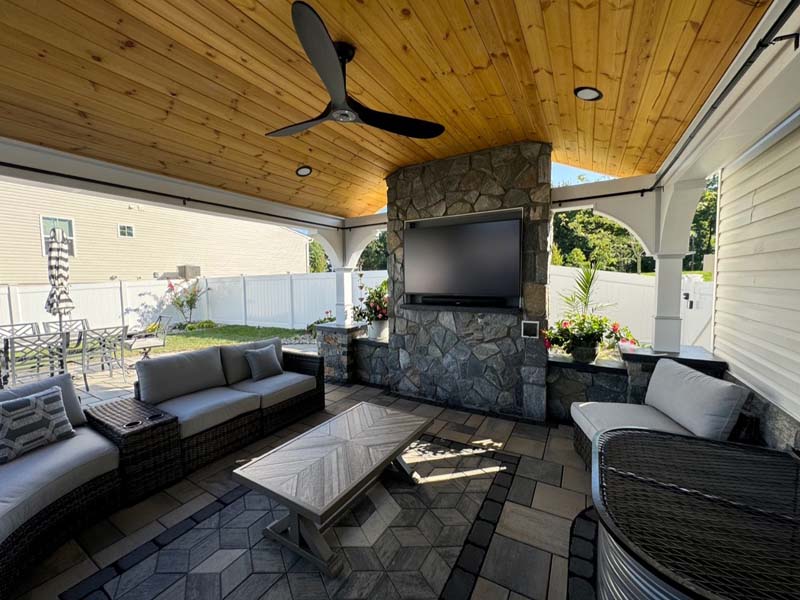
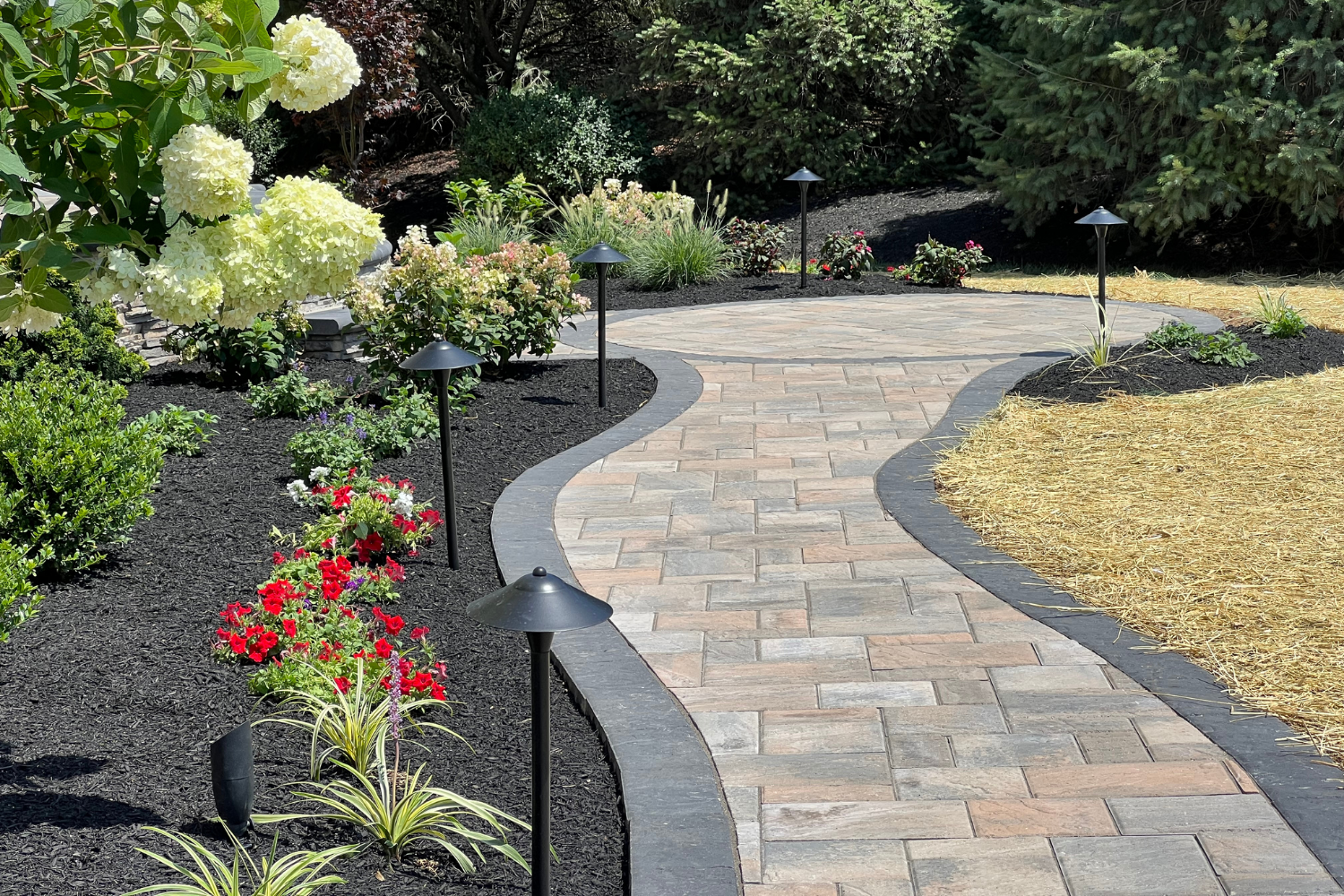
Choosing the surface for your patio is one of the most important design decisions you will make. It sets the tone for the whole outdoor space and affects how the patio ages over time.
For most homeowners in Bucks County and Montgomery County, the choice comes down to pavers vs natural stone. Both are excellent. Both last for decades when installed correctly. But they look, feel and perform differently. This guide will help you decide which fits your home, style and budget. For examples of our work, see our paver patios and broader hardscaping services.
Pavers are manufactured units, usually made of concrete or clay brick. They come in consistent sizes, colors and textures. Modern pavers can mimic tumbled cobblestone, smooth modern slabs or even natural stone.
Strengths:
Limitations:
Natural stone is quarried rock cut into slabs or irregular pieces. Bluestone is especially popular in southeastern Pennsylvania. Flagstone, travertine and granite are other choices.
Strengths:
Limitations:
| Factor | Pavers | Natural Stone |
|---|---|---|
| Appearance | Uniform, many styles | Unique, organic |
| Cost | Usually lower | Usually higher |
| Installation | Faster, more predictable | Slower, more skilled |
| Repairs | Easy to swap pieces | Harder to match exactly |
| Durability | Excellent with proper base | Excellent with proper base |
| Freeze and thaw | Performs well | Depends on stone type |
| Maintenance | Joint sand upkeep | Sealing for some stones |
In most pavers vs natural stone comparisons, pavers cost less. Natural stone usually carries a higher material price, and irregular pieces take longer to fit. Base preparation is similar for both, and it is often the largest part of the budget. Read our full guide to paver patio cost for the factors that shape your price.
Your home’s architecture should guide the decision.
Browse our project gallery or read about our approach to hardscape design for inspiration. Homeowners in New Hope frequently choose natural stone to match the area’s character.
You do not have to pick just one. Some of our favorite designs blend materials. A bluestone patio might be framed with a paver border. A paver patio might include a natural stone inlay around a fire pit. Mixing materials can balance budget and beauty.
The pavers vs natural stone decision also applies to walkways. Pavers create clean, defined paths. Irregular flagstone creates a relaxed, garden feel. See our work on paver walkways in Horsham for examples.
Both materials can handle Bucks County and Montgomery County winters when installed on a proper base. The real risk is poor installation. Shallow bases, weak compaction and missing edge restraints cause heaving and shifting no matter what sits on top. Our paver installers in Warminster follow proven base standards on every project.
Choose pavers if you want design flexibility, a controlled budget and easy repairs.
Choose natural stone if you want a one-of-a-kind look and are comfortable with a higher investment.
Choose both if you want a custom look that balances cost and character.
Here are some of the materials homeowners ask about most often.
Bluestone. A regional favorite with blue-gray tones. It comes in uniform pattern cuts or irregular flagstone. It pairs well with historic homes and stone walls.
Flagstone. Irregular pieces that create a natural, relaxed look. It works beautifully for garden paths and informal patios.
Tumbled concrete pavers. These have softened edges that give an aged look without the higher cost of reclaimed materials.
Large-format pavers. Clean lines and minimal joints create a modern, upscale feel.
Clay brick pavers. A classic option that suits colonial homes and traditional landscapes.
Whichever direction you lean in the pavers vs natural stone debate, seeing samples in person makes a big difference. Color and texture look different in natural light than they do online.
Both are very durable when installed correctly. Dense stones like bluestone and granite hold up well. Quality concrete pavers are engineered for strength and freeze and thaw resistance.
Thermal finished bluestone offers better traction than smooth finishes. Natural cleft bluestone also has texture. We help select finishes that suit pool areas and walkways.
Sealing is optional for pavers but can protect color and help lock joint sand. Some natural stones benefit from sealing to resist stains, especially near grills and outdoor kitchens.
With a proper base, both can last for decades. Longevity depends more on installation quality than on the material itself.
Yes. We bring samples to consultations and can show both options in a 3D rendering so you can compare them on your actual property.
Still weighing pavers vs natural stone? DiCenso Landscaping designs and builds paver patios and natural stone patios for homeowners across Bucks County and Montgomery County, from New Hope and Doylestown to Horsham and Gladwyne.
Call 267-261-6223 or book a design consultation to see your options in person.